
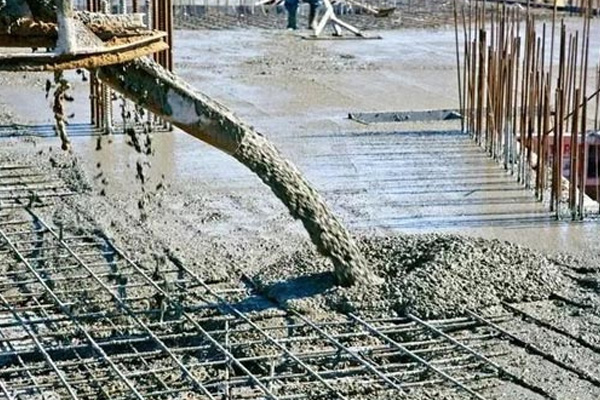
Plasticizers play a very important role in concrete, especially when you want strength, durability, and good workability without compromising quality.
What is a Plasticizer?
A plasticizer (also called a water-reducing admixture) is a chemical added to concrete that improves workability without adding extra water.
Why Plasticizer is Important in Concrete
1. Improves Workability
- Makes concrete easier to mix, place, and compact
- Reduces effort during vibration and finishing
- Helps in congested reinforcement areas
Example: In columns, beams, and slabs with heavy steel, plasticizer ensures proper flow.
2. Reduces Water Requirement
- Can reduce water content by 10–20%
- Lower water = stronger concrete
Less water means fewer pores → higher density
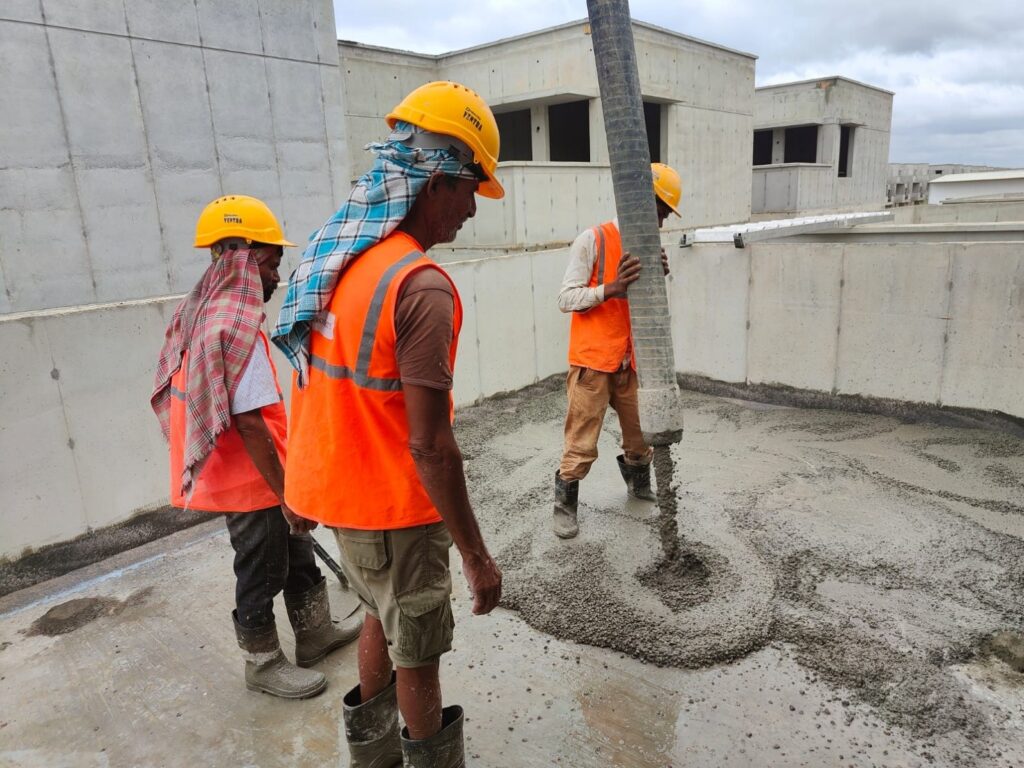
3. Increases Strength
- Due to lower water-cement ratio
- Produces high compressive strength concrete
Important for RCC structures and load-bearing elements.
4. Improves Durability
- Reduces permeability (water cannot easily enter)
- Protects steel reinforcement from corrosion
Essential in waterproofing and long-life structures
5. Better Surface Finish
- Reduces honeycombing and segregation
- Gives smooth and dense finish
6. Improves Placement Time (Some Types)
- Certain plasticizers act as retarders
- Useful in hot weather concreting
7. Cost Effective
- Reduces cement requirement (in some designs)
- Saves overall project cost
Where Plasticizers Are Most Useful
- Waterproofing works (terraces, basements)
- High-strength concrete (M30 and above)
- Pumped concrete
- Slabs, beams, columns
- Repair and retrofitting works
Simple Concept to Remember
“Same strength with less water OR more strength with same water.”
Important Note
Plasticizer alone is not enough:
- Proper mix design
- Good workmanship
- Proper curing
All together ensure durable concrete
Pro Tip (for your field work)
For waterproofing-related concrete:
- Use plasticizer + proper compaction + curing = Leak-proof and durable structure
1. Concrete WITHOUT Plasticizer (Clumped Particles)
What happens:
Depending on the severity:
- Cement particles stick together (flocculation)
- Water gets trapped inside lumps
- Concrete becomes:
- Hard to mix
- Poor flow
- Needs extra water
More water = lower strength & more cracks
2. Concrete WITH Plasticizer (Dispersed Particles)
What happens:
- Plasticizer gives negative charge to cement particles
- Particles repel each other and spread out
- Trapped water is released
Result:
- Smooth flow
- Better compaction
- Less water needed
This dispersion mechanism improves workability without weakening concrete
3. Simple Visual Concept (Easy to Remember)
WITHOUT Plasticizer:
[ Cement Lumps ] + Water trapped → Poor flow → Weak concrete
WITH Plasticizer:
[ Cement Particles Spread Evenly ] → Free water → Easy flow → Strong concrete
- Correct diagnosis of the problem
- Selection of appropriate materials
- Long-lasting repair solutions
- Compliance with structural safety standards
4. Real Site Comparison
| Property | Without Plasticizer | With Plasticizer |
|---|---|---|
| Workability | Low | High |
| Water Required | High | Low |
| Strength | Lower | Higher |
| Finish | Rough | Smooth |
5. Key Technical Insight
- Plasticizers act like lubricants between cement particles
- They break particle clumps and improve flow
- Strength increases because water-cement ratio decreases
Conclusion
“Plasticizer doesn’t add strength directly—it removes excess water, and that’s what increases strength.”