
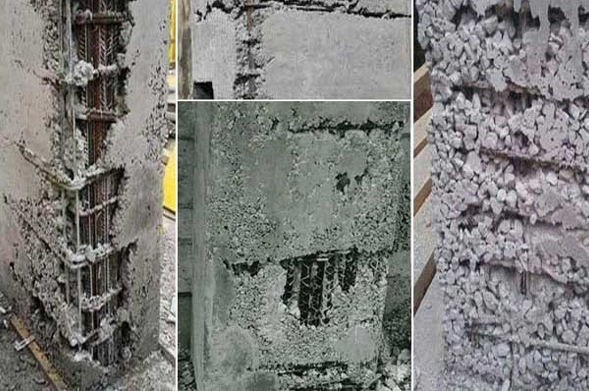
Concrete is one of the most durable construction materials, but poor workmanship, improper compaction, or inadequate curing can lead to defects. One of the most common and serious issues seen in reinforced concrete (RCC) structures is honeycombing. If left untreated, it can compromise both durability and structural integrity.
What is Honeycombing in Concrete?
Honeycombing refers to the presence of voids, cavities, or porous areas in hardened concrete where mortar has not properly filled the spaces between aggregates. This results in a rough, uneven surface resembling a honeycomb.
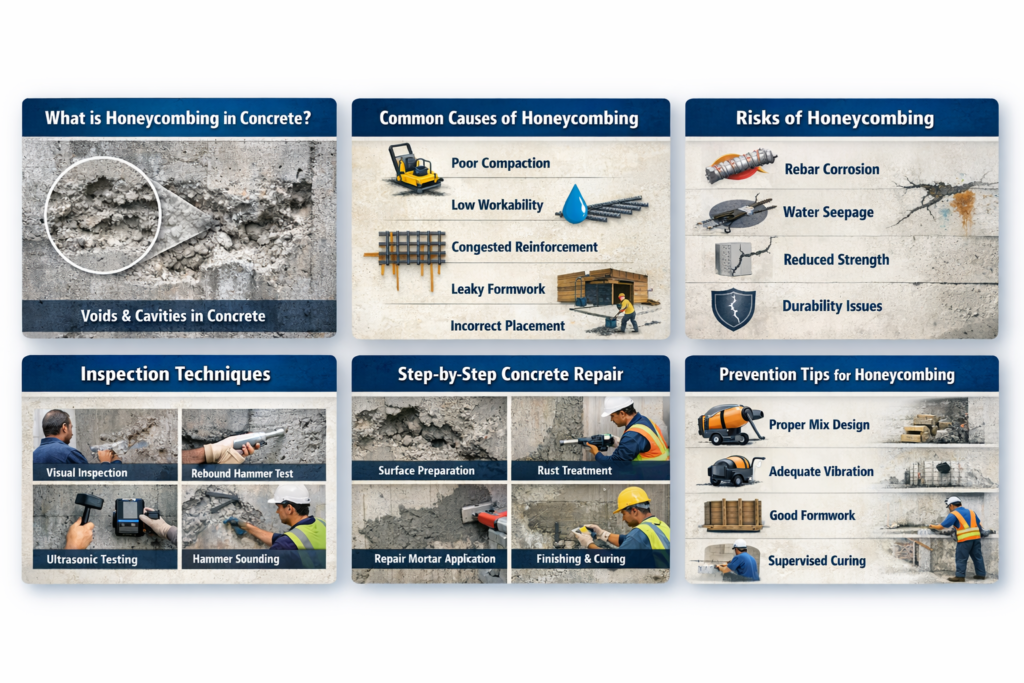
Common Causes of Honeycombing
- Improper vibration or compaction
- Low workability of concrete mix
- Congested reinforcement
- Poor formwork or leakage
- Incorrect placement techniques
Why Honeycombing is Dangerous
Honeycombing is not just a cosmetic issue—it directly affects the strength and durability of the structure.
Key Risks:
- Reduced load-bearing capacity
- Exposure of reinforcement leading to corrosion
- Water seepage and leakage
- Decreased durability of the structure
- Increased maintenance costs over time
Inspection & Diagnosis
Before starting any repair work, proper inspection is crucial.
Modern Inspection Techniques:
- Visual inspection
- Hammer sounding test
- Use of moisture meters
- Rebound hammer testing
- Ultrasonic pulse velocity (UPV) testing
Advanced inspection tools help determine the depth and severity of the defect, ensuring the right repair methodology is selected.
Step-by-Step Repair Methodology
Repairing honeycombed concrete requires a systematic and professional approach:
1. Surface Preparation
- Remove loose and weak concrete using chipping tools
- Clean the area thoroughly to remove dust and debris
- Expose sound concrete surface
2. Rust Treatment (if steel is exposed)
- Clean reinforcement bars using wire brush or sandblasting
- Apply anti-corrosion coating
3. Bonding Agent Application
- Apply a suitable bonding agent (like epoxy or polymer-based) to ensure strong adhesion between old and new material
4. Repair Material Application
Depending on the severity:
- Minor honeycombing: Use polymer-modified repair mortar
- Moderate damage: Use micro-concrete or non-shrink grout
- Severe damage: Use form-and-pour or shotcrete methods
5. Finishing & Curing
- Proper finishing of the repaired surface
- Adequate curing to achieve strength and durability
Importance of Professional Execution
Structural repairs are highly sensitive. Improper repair can worsen the problem instead of solving it. Professional expertise ensures:
- Correct diagnosis of the problem
- Selection of appropriate materials
- Long-lasting repair solutions
- Compliance with structural safety standards
Preventive Measures for Future
Prevention is always better than repair. Follow these best practices:
- Ensure proper concrete mix design
- Use adequate vibration during placement
- Maintain proper cover to reinforcement
- Use quality formwork
- Supervise concrete pouring and curing carefully
Conclusion
Honeycombing in concrete is a serious defect that requires immediate attention. With the right inspection techniques and professional repair methods, distressed concrete structures can be restored to their original strength and durability.
Investing in expert structural repair solutions not only extends the life of your building but also ensures safety and long-term cost savings.